
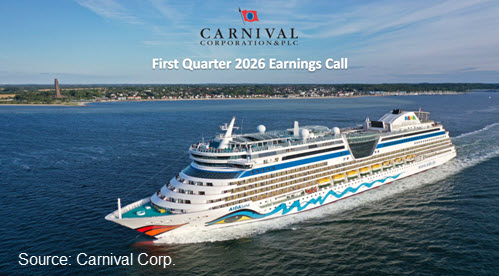
After a lot of recent focus on Norwegian (and for good reason – hello, Luna!), Carnival just reminded everyone why it remains such a major force in the cruise industry. Carnival’s Q1 2026 Earnings are out and there’s a lot to get excited about… despite all the talk about fuel!
The company released its first quarter 2026 earnings today, and the overall message is clear: cruising demand is still incredibly strong. But like most things right now, the full story is a little more nuanced.
By the Numbers
At first glance, the results are undeniably solid. Carnival reported $6.2 billion in revenue, setting a new record for a first quarter. That’s notable because Q1 is typically a quieter period following the holiday surge. Even more impressive, the company posted adjusted earnings of $0.20 per share, coming in ahead of expectations. EPS is up 50% compared to 2025. The world’s largest cruise operator also expects nearly $150 million in operational improvements that will partially mitigate impact on recent fuel prices.

Digging Deeper
Dig a little deeper, and the strength becomes even more apparent. Carnival is seeing continued momentum in both ticket pricing and onboard spending. Guests are booking cruises at higher rates while also spending more once they’re onboard. The combination of strong pricing, plus strong onboard revenue, is exactly what cruise lines want to see. And it’s a big reason why overall yields continue to trend upward.
Another standout from the report is how far in advance people are booking. Carnival noted that its booking curve remains extended, meaning travelers are locking in cruises earlier than they historically have. Even more telling, those bookings are coming in at record prices for future sailings, including into 2026. That’s a strong signal that demand isn’t just a short-term spike. It’s holding steady well into the future.
If you’ve cruised recently, none of this will feel surprising. Ships are full. Prices are higher. Last-minute deals are harder to find. Carnival’s results essentially confirm what many of us are already seeing firsthand.
Fuel Costs Stirring the Waters
However, despite all of this positive momentum, the market didn’t react the way you might expect. Carnival’s stock dipped following the announcement, and the reason comes down to the cost of fuel.
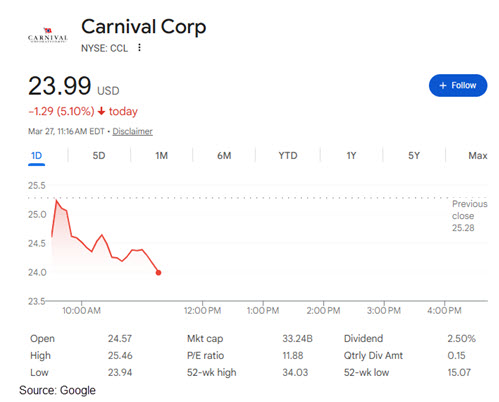
The company adjusted its full-year outlook, lowering projected earnings from around $2.48 per share to approximately $2.21. That change wasn’t due to weaker bookings or softer pricing. It was driven almost entirely by higher fuel costs. Unlike some competitors, Carnival doesn’t hedge fuel, which makes it more sensitive to swings in oil prices. With fuel trending upward, that creates a headwind on the financial side, even while the ships themselves remain full.
For cruisers, though, the implications are pretty straightforward.
The kind of demand environment Carnival is seeing will keep prices elevated. When ships are sailing at or above capacity, and future bookings are coming in strong, there’s very little incentive for cruise lines to discount heavily. If anything, it reinforces the idea that booking earlier is becoming more important if you want to lock in a good rate.
It also means the onboard experience continues to reflect that high occupancy. Full ships bring energy and atmosphere, but they can also mean longer lines, busier pool decks, and more competition for reservations. It’s the tradeoff we’re seeing across the industry right now.
At the same time, Carnival’s financial position continues to improve. The company has been steadily working down its debt while increasing profitability, and this quarter’s performance shows that strategy is gaining traction. Strong revenue, higher pricing, and consistent demand are all helping to move things in the right direction.
Turning Carnival’s Fuel Woes Into OBC
Here’s where this all becomes beneficial for frequent cruisers.
Carnival’s 2026 Shareholder Benefit remains one of the most practical perks in cruising today. By holding at least 100 shares of Carnival stock, eligible guests can receive onboard credit of up to $250 per sailing! In an environment where cruise fares are rising and onboard spending is increasing, that credit can go a long way toward offsetting costs.
As Carnival’s stock takes a dip, the Carnival Shareholder Benefit suddenly costs less! A month ago, it would have cost you close to $3,200 to purchase 100 shares. Today it’ll cost you just over $2,400. That represents a savings of nearly one thousand dollars. You only need a couple cruisers where you earn $250 OBC to see how quickly the Carnival Shareholder Benefit makes sense.*
It’s something we’ve talked about before, but it feels particularly relevant right now. With demand pushing prices higher, finding ways to add value to your cruise becomes even more important. For those who sail Carnival regularly, this is one of the simplest ways to do exactly that.
*As a reminder, we are NOT financial planners, we just look to maximize every dollar we spend. It’s important to consider your own situation and invest at your own risk. Mark and Rocky can’t predict the future of the stock market and nothing in this article should be taken as investment advice.
Big Picture
Looking at the bigger picture, Carnival’s Q1 earnings reinforce a trend we’ve been watching for a while now. The cruise industry isn’t just recovering, it’s thriving. Demand remains strong, guests are willing to spend more, and booking patterns suggest that momentum is continuing well into the future.
Yes, there are external factors like fuel costs that can impact the business side of things. But from a cruiser’s perspective, the takeaway is largely positive. Ships are sailing full, new guests are discovering cruising every day, and the overall appetite for vacations at sea shows no signs of slowing down.
And if you’re planning your next cruise, it might be worth thinking not just about where you’re going, but how you can get the most value once you’re onboard.